
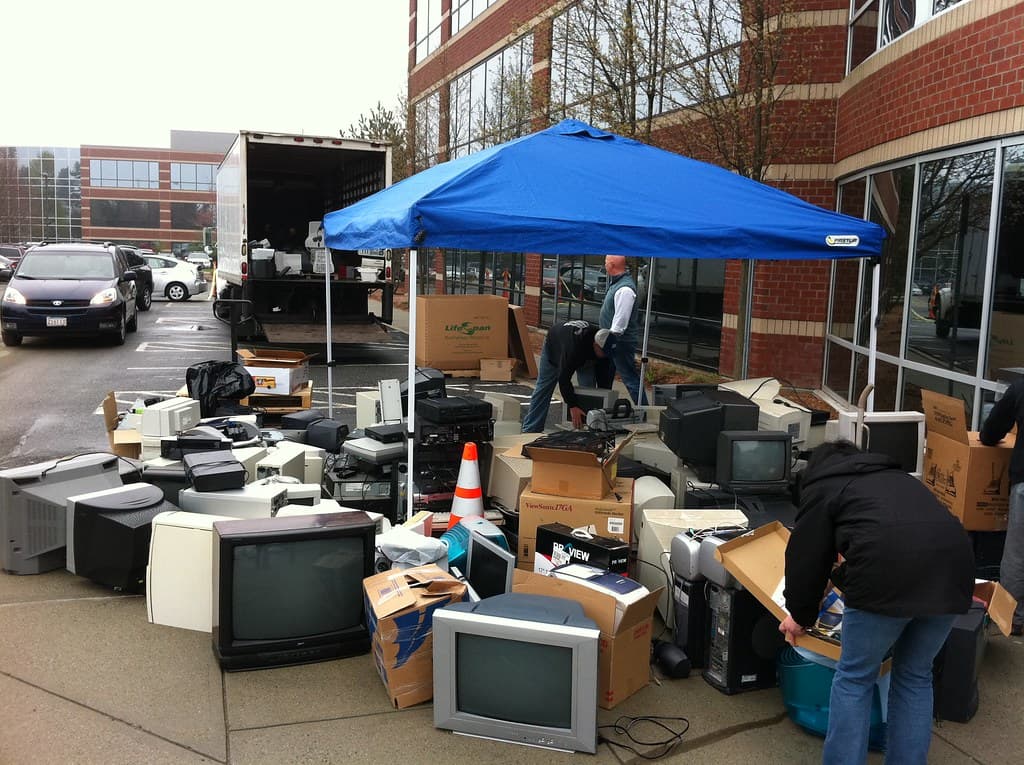
Collected office hardware and CRT monitors staged for organized pickup during an office exit

Case studies / Relocation and recovery

Lease-exit relocation cut move cost by 84%.

TALC cleared a startup floor, protected data-bearing devices, and redirected resale-worthy equipment into recovery channels before the lease clock ran out.

15 Dec 20236 min readSan Francisco, CA
84%lower move cost

The relocation scope was redesigned around recovery instead of disposal-only hauling.

3 daysexecution window

Pickup, staging, data wipe coordination, and outbound movement were kept inside one move period.

$50Klease cost avoided

The client avoided an additional lease burden by clearing the floor before the deadline.

The client did not need another hauling vendor. They needed a tightly sequenced operating plan that would clear the space, preserve resale value, and document every data-sensitive touchpoint before the move window closed.

Client profile

Fast-growing crypto startup preparing to leave a full office floor.

Operational pressure

Mixed IT inventory, short lease timeline, and no room for vendor handoffs.

Why TALC

One team could sequence removal, sanitization, documentation, and recovery together.

A relocation problem was also an asset disposition problem.

The office contained workstations, networking gear, monitors, and mixed hardware with very different downstream paths. Some units still carried market value. Some carried data risk. All of them had to move quickly.

Treating the project as a simple removal job would have pushed everything into the same stream. TALC reframed the scope around separation: what had to be wiped, what could be recovered, what needed controlled recycling, and what had to move first.

  • Build a clean inventory before equipment started leaving the floor.
  • Keep chain of custody intact for data-bearing devices.
  • Protect the recovery opportunity instead of defaulting to bulk disposal.

The move was sequenced around control points, not around truck capacity.

TALC staged the project in waves so the client could keep the move understandable at every step. Devices were cataloged, routed into wipe-or-destroy workflows, then redirected into either relocation, resale, or recycling channels.

That sequencing mattered because it removed decision friction in the middle of a short move. The client did not need to manage separate vendors for packing, data handling, disposition, and reporting.

Technicians working between rack rows in a data center environment
Scope

Relocation, chain of custody, data destruction, and asset recovery

Execution sequence

The work stayed controllable because each phase solved one problem at a time.

01

Inventory and route planning

Each asset was assigned to the correct path before physical movement accelerated: relocate, recover, sanitize, destroy, or recycle.

02

Secure data handling

Storage media was processed with documented sanitization or destruction so data-sensitive devices never drifted outside the project controls.

03

Move-window execution

The removal schedule was kept inside the lease-exit timeline, with staging and outbound logistics coordinated as one continuous operation.

04

Recovery and closeout

Recoverable hardware moved into buyer channels while residual material went into certified downstream recycling with final documentation.

What moved where, and why.

Relocate

Equipment the client still needed was staged for controlled transfer rather than mixed into retirement inventory.

Recover

Resale-worthy hardware was separated early so market value could be captured while the move was still in progress.

Contain

Data-bearing devices stayed inside wipe and destruction controls before any downstream decision was finalized.

Close

Residual electronics were routed to certified recycling so the lease exit ended with a documented finish, not loose ends.

Outcome

The project stayed fast because the operating model stayed simple.

The strongest result was not just the 84% cost reduction. It was the fact that logistics, secure handling, and value recovery were managed as one scope with one accountable operator.

That kept the move legible for the client and preserved options that would have been lost in a disposal-first workflow. The floor was cleared, data-sensitive equipment stayed controlled, and the final disposition matched the condition of each asset.

  • Lower relocation cost without giving up resale value.
  • One move window instead of multiple overlapping vendor schedules.
  • Documented chain of custody through to final disposition.