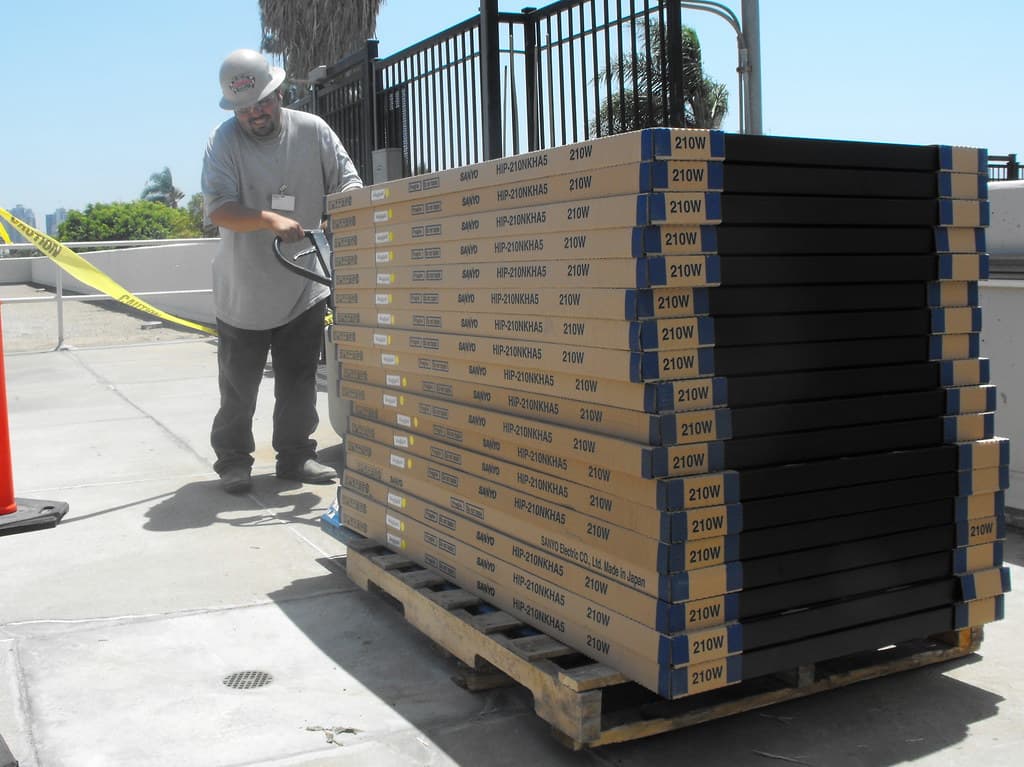
Palletized boxed solar panels being moved during a solar equipment handling project

Case studies / Liquidation

Solar inventory liquidation turned idle stock into working capital.

TALC turned stalled equipment into a coordinated liquidation program by matching viable inventory to buyers, managing transport, and keeping residual material inside compliant handling channels.

15 Mar 20234 min readBay Area, CA
Buyer Channelssaleable equipment routed into active demand

Usable inventory was routed into active contractor, installer, and reseller demand instead of lingering in storage.

Coordinated Pickupmovement scheduled around warehouse operations

Assessment, transport, and sale sequencing stayed under one operating plan.

Compliant Closeoutresidual material kept inside standards-led handling

Anything outside resale fit moved into environmentally appropriate downstream channels.

The inventory still had value, but that value was trapped inside storage. The job was not just to remove equipment. It was to determine what should be sold, who would buy it, how it would move, and how the remaining material would be handled without creating noise for the client team.

Client profile

Solar operator holding surplus equipment that no longer fit current projects.

Operational pressure

Warehouse space and attention were being consumed by stock that had stopped moving.

Why TALC

The team needed liquidation, logistics, and compliant handling without building an in-house resale process.

Stored inventory was tying up space, attention, and cash potential.

The client had equipment that was no longer aligned to current demand but still carried utility for other operators. Leaving it in place meant more than lost square footage. It meant delayed decisions and stranded capital.

TALC approached the project like a market-routing exercise, not a warehouse cleanup. The first question was what could move through buyer demand. Only after that did the residual handling plan get finalized.

  • Separate viable sale inventory from low-value residual stock.
  • Use active buyer channels instead of ad hoc listing work.
  • Keep transport and pickup aligned to warehouse realities.

Liquidation worked because every equipment class got its own downstream answer.

The project was structured to reduce internal client effort. TALC evaluated the inventory, aligned likely buyer pools, coordinated movement, and prevented the warehouse team from becoming a resale desk.

That is the main distinction between liquidation as a service and liquidation as a side task. One creates working capital. The other just creates more operational drag.

Solar equipment facility with production lines and technical workstations
Scope

Inventory evaluation, buyer matching, logistics coordination, and environmental closeout

Execution sequence

The work stayed controllable because each phase solved one problem at a time.

01

Inventory assessment

The equipment was reviewed for condition, resale fit, and likely demand so the liquidation plan could start with real market logic.

02

Buyer alignment

TALC mapped the usable inventory to contractors, installers, and reseller channels that could move product without unnecessary delay.

03

Transport coordination

Pickup and movement were scheduled to work around the client site rather than forcing warehouse operations to adapt around the liquidation.

04

Residual closeout

Anything outside recovery fit was directed into standards-compliant handling so the project closed cleanly and responsibly.

What moved where, and why.

Identify

Saleable units were separated by condition and demand profile before movement began.

Match

TALC used buyer knowledge to push useful equipment back into the field rather than back onto a shelf.

Move

Transport and pickup were coordinated as part of the liquidation workflow, not left as a follow-up problem.

Finish

Residual materials were handled through environmental channels that aligned with compliance expectations.

Outcome

The warehouse got space back, and the inventory finally moved in the right direction.

The client did not need a visually impressive dashboard. They needed equipment to stop sitting still. TALC delivered that by turning inventory evaluation, buyer routing, and site coordination into one program.

The result was a liquidation effort that behaved like operations work rather than like a side-market experiment. Working capital improved, space reopened, and the remaining material left through the right downstream path.

  • Usable equipment put back into active buyer channels.
  • Warehouse burden reduced without forcing extra client coordination.
  • Clear line between recovery inventory and residual material handling.